


Kayak guide to the Whistler Corridor
“Success is going from failure to failure without a loss of enthusiasm.”
Sir Winston ChurchillThis kayak guide is the result of a great many trips we have enjoyed.
Visit our canoeing adventures page for Whistler adventures waiting for you.
Kayaks have been around for a very long time. Centuries really. The name comes from the Eskimo words meaning hunters boat. The natives of the arctic regions of Asia, Greenland and North America constructed these amazing craft using pieces of driftwood and even pieces of antler and bone for the frame and seal or caribou skin for the cover. Everything was lashed together with the aid of sinew from the animals. Even the needles were made form walrus ivory or antler.
Their kayaks were long and narrow and perfectly suited for hunting seals and walrus in the very cold water of the seas. Seals were the main staple of their diet. The kayaks offered the seals a very low silhouette enabling the hunter go approach to within harpoon range.
By the late 1890s the Europeans had managed to copy the design of these craft and began using them to run rivers and streams as well as lakes.
In 1905 the first folding kayak was made by Johann Klepper of Germany. enabling the user to carry their kayak I a couple of bags. This proved to be very convenient as they could be assembled on the spot at the waters edge. This method is still very much in use today all over the world. This kayak guide will be some assistance if you are thinking of purchasing one.
Johann Klepper

Johann Klepper was to kayaking what Henry Ford was to the automobile. Designer, engineer and a brilliant mass producer. He was born in Germany and the name Klepper has been at the front of kayak building ever since. From the very first he wanted to design a kayak guide that could be carried around and assembled at the waters edge. The wanderlust was just catching on in the early 1920s and he was ready to fill the bill.
Klepper sailing.
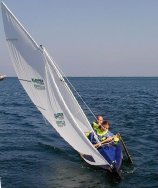
Kayaks of today may be sailed. Most companies accessories list masts and sails. They are really handy when traveling downwind. Although not the greatest sailing machines ever built, they will save a lot of energy in the proper wind. The masts are aluminum with nylon sails and stays.
Folbot

This is the model Greenland II. At 17 feet and a 34“ beam and a weight of 62 pounds it is an incredible craft. All Folbots have composite frames with aluminum tubing that practically eliminate maintenance. The hull is hypalon and the top deck polyester. Plenty of storage area. The kayak guide loves it.
The top deck zippers together and has a Velcro storm flap. The boat can be put together in 20 minutes but the first time will take you about an hour. We met a factory representative at an outdoor show and watched him put it together in 8 minutes. That certainly isn’t the norm by a long shot. Inflatable air sponsors along the sides tighten things up and add additional buoyancy.
It’s not the fastest boat on the water but it will get you there safely with all the camping gear. In this kayak guide we show one of the six different models Folbot makes.
The C-Tug Boat Cart supports 300 lbs. of weight and collapses to stow in a mid-sized kayak hold. Supports up to 300 lbs. Collapses quickly to stow in a mid-sized kayak hold. Seven simple components break apart and snap together with ease--no moving parts to corrode, rust, or gum up from sand. Thermo-bonded elastomeric seat pads stick tightly to boat hulls. Comes with a 2.4 meter (7.9 foot) strap for lashing your kayak to the cart. Stainless steel reinforced axles will take the weight and resist the corrosive marine environment. Wheels are 10" in diameter and longest part is 21" in length. Removable kickstand
A few years ago I had an accident which compacted three of my vertebra. For years I have had trouble sitting for any length of time. Our kayak proved to be the answer to my problem. The seats are easy on the back and the stability offered by the design gives the kayak a very low centre of gravity.
With the storm collars on these little craft can handle anything from a gentle wave to hurricanes. Back in 1939 a kayaker was found asleep in his kayak on the shore of St. Thomas in the virgin islands. Awakened, he described how he had just finished a trip from Portugal, 4,000 miles away. He had weathered two hurricanes on the way.
Paddling a kayak is very easy as the paddle works both sides of the boat. We should explain via this kayak guide, that the folding kayaks are not as fast as hard shell ocean kayaks, but are much more stable. If you are not in a hurray, they are perfect. Ideal for riding fast rivers, silently gliding through marshes and estuaries where you may get up close and personal with all kinds of animals and birds. For some reason we could not understand why birds and large animals will allow a kayak to approach to within a few feet where as on land they will take flight.
Air, or floatation bags are inflatable waterproof bags that are deigned to stuff under the bow and stern to add extra floatation. Waterproof stuff bags are for carrying clothing. Boat accessories also include a great many styles of paddles.
A kayak guide must show that a compass is another accessory which may not appear to be a useful gadget, but, try kayaking on a foggy day without one. You will wish you had taken the plunge and bought one. They can be mounted for viewing.
Motor mounts are available for small motor use. Rudders assemblies are useful but most well designed kayaks will track quite well without them.
Patch kits are invaluable to have. Good quality kayaks have the bottom hull made of hypalon, a very tough waterproof material. This consists of a very strong polyester or nylon material sandwiched between two layers of waterproofing creating an almost tear proof skin. However a repair kit is good insurance.
Other manufacturers of folding kayaks are by Puffin, Feathercraft and Pouch.
Inflatable Kayaks. A kayak guide should include inflatable kayaks. At approximately half the price of a folding kayak and a very short set up time these kayaks have come a long way in recent years. The material is very tough, they are available in a great many styles, and are very rigid when properly inflated. No frame to put together. They weigh about the same as a folding kayak. The two shown in this photo are by Seeker.
Hard shell
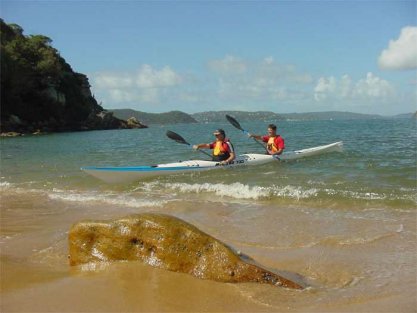
In this kayak guide we want to distinguish between soft shell and hard shell kayaks. Up to now we have featured soft shell. These following kayaks are made of fiberglass or plastic and we call them hard shells.
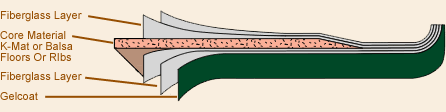
Actually the classic hard shell is made of a sandwich of materials as shown here. It results in a very strong and lightweight craft. You will notice the hard shell is usually longer length and narrower than the folding and inflatable boats. They use rudders to make tracking easier and are much faster. As they are rigid, they must be transported intact. Rooftop carriers are manufactured for them but this must be considered when considering buying one of these kayaks. They are not really suitable for small compact autos.
Kayaks come in all shapes and sizes. You can build a kayak using kayak plans. A great many have done so including the Eskimos who started using kayaks thousands of years ago. Today many adaptations have evolved. Fishing kayaks are designed to allow the fisher the freedom to cast as well as land fish. The 2 person kayak or tandem kayak is perfect for two people to enjoy touring in the ocean kayak or in the lakes and rivers of the world. Folding kayaks such as Klepper and Folbot can be used with kayak sails and simply fit into two kayak storage bags when taken apart.
The inflatable kayak is perfect for those who want to poke along in the still lake waters or have fun in some easy white water runs. Kayak covers help to keep the white water out where it belongs. They come in many configurations but they can weigh over 40 pounds do you may want to consider a kayak cart to carry it any distance. Years ago we bought a well used kayak Folbot. The frame was almost welded together from exposure to salt water. We made a kayak storage rack for the roof of our old Buick and used a kayak cart to strap under the body. We ran this thing over rough trails and beaches but it did the trick. This was kayak travel rube Goldberg style.
A sit on top kayak is a lot of fun for the warmer waters. These are very popular in resort areas and are more stable than they look.
Kayak accessories cover everything from the kayak paddle as well as everything you possibly could need for kayak camping.
Of course the manufacturers have taken this into consideration and their dealer networks will either have rentals available or will direct you to rental shops who have all of the equipment you need to get on the water. As there are so many shops available this kayak guide will not go there.
Plastic Kayaks
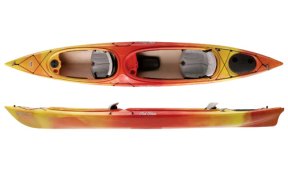
Rigid shell, plastic kayaks are very tough. They will withstand banging into rocks in a fast flowing river of a rocky surf. They come in tons of models and designs. This kayak is made of variable layer polyethylene, thicker where needed most and thinner where it isn’t needed. This kayak is a 10’ model made of vacuume-moulded thermoformed acrylic/ABS so it is really tough and handles very well. A great addition to a kayak guide.
A recreational kayak that allows for a whole new perspective on kayaking, thanks to the in-cockpit hull window. Approximately $1,100 CDN
Kayaking. A web site for kayakers, by kayakers.
Return from Kayak guide to whistler Outdoors
